What is an H1 Tag? (Simple Explanation + SEO Best Practices)
If you’ve ever looked into SEO, you’ve probably heard the term “H1 tag” — but what does it actually mean?
Let’s break it down in the simplest way possible.
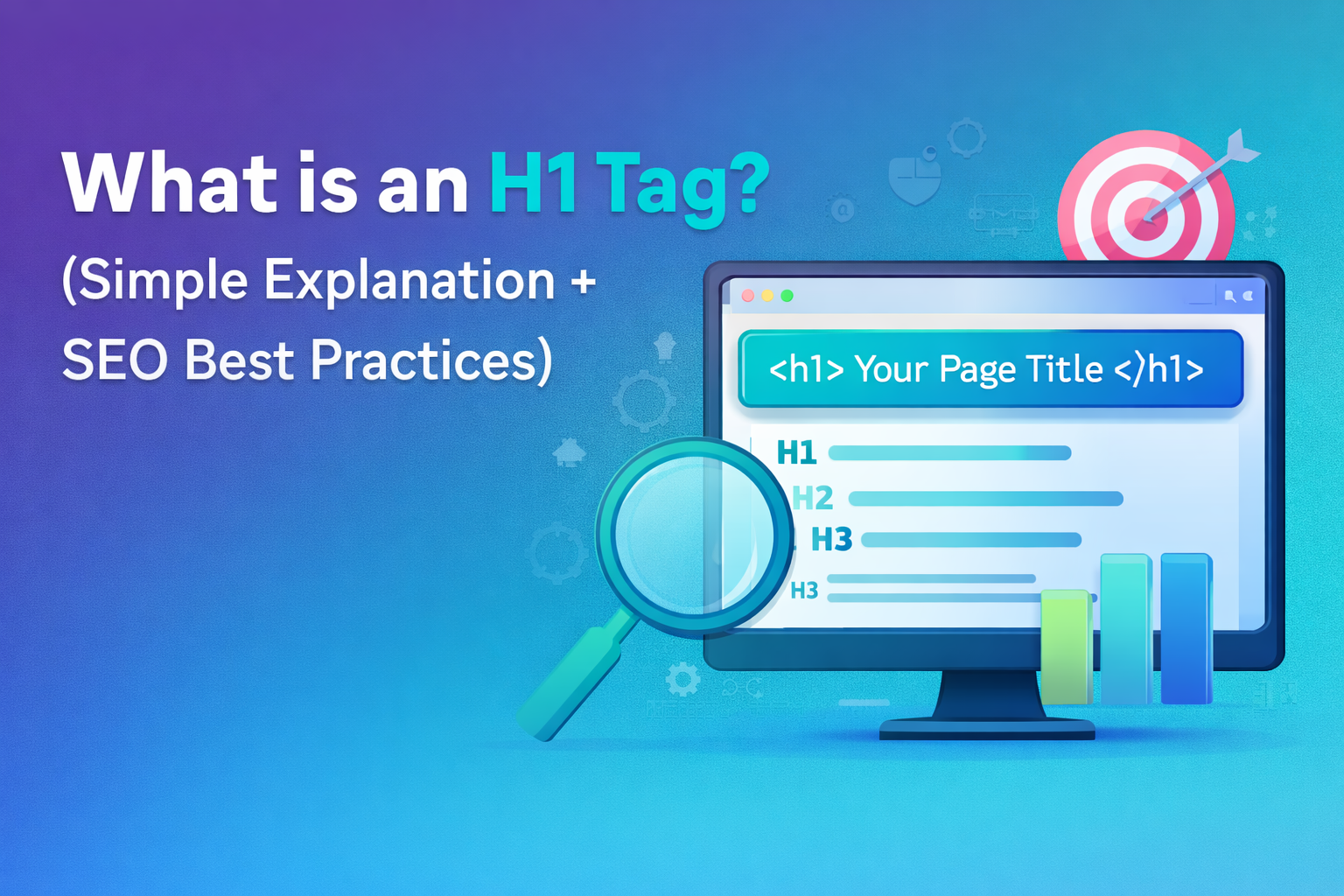
An H1 tag is the main heading of a webpage. Think of it as the title of a book. It tells both users and search engines what the page is about.
When someone lands on your page, the H1 is usually the first thing they see. It sets the context instantly.
But here’s where it gets important for SEO.
Search engines like Google use the H1 tag to understand the main topic of your content. If your H1 is missing, unclear, or duplicated, it can confuse search engines — and that can hurt your rankings.
That’s why having a clear and properly structured H1 tag is essential.
Now you might be wondering:
How many H1 tags should a page have?
The best practice is simple — one page, one H1.
This keeps your content focused and easy to understand.
Another common mistake is skipping heading levels. For example, jumping from H1 directly to H3. This breaks the content hierarchy and affects readability.
A good structure looks like this:
H1 → H2 → H3 → H4
Each level supports the one above it.
Also, your H1 should include your main keyword naturally. Don’t force it — just keep it clear and relevant.
If you’re not sure whether your page is optimized correctly, the easiest solution is to use an H1 checker tool.
It shows you exactly what’s happening on your page — whether your H1 is missing, duplicated, or structured incorrectly.
👉 You can try our free H1 checker tool here:
[Internal Link to /headings-checker/]
In the end, SEO is not just about keywords — it’s about structure, clarity, and user experience.
And your H1 tag is where it all starts.