
How to Choose an SEO Platform for Small Business Websites in 2025
Choosing the best SEO platform for small business websites gives your site a real chance to compete with bigger brands. The wrong choice wastes time and money. This guide shows a clear path to help you pick tools that match your goals, budget, and the way your website grows.
What is an SEO platform for small business websites
An SEO platform is a set of tools that helps you improve search traffic and leads. It usually includes keyword research, site audits, content optimization, rank tracking, and reporting. Choosing the best SEO platform for small business websites matters because Google needs support to crawl, understand, and index your pages. A strong platform makes that work easier for both you and Google.
For small businesses, the right platform should feel simple to use, work well with your current site, and match the budget you can invest.
Why do small businesses need an SEO platform
Search brings people who already want answers, services, or products. Studies show that listings near the top of results get most clicks, while very few users go to page two.
You face three main challenges:
- Limited budget
- Limited time
- Strong competition from bigger brands
An SEO platform gives you data, structure, and repeatable tasks. That structure lets you focus on actions that move the needle, not random tricks.
How does search work for your website using the best SEO platform for small business
Before choosing tools, you need a clear picture of how search works. Search engines find pages through links, sitemaps, and new URLs. They crawl and render pages almost like a normal visitor. After that, they index pages and store key data such as content, links, and freshness. Finally, they rank pages based on relevance, quality, and user signals.
The best SEO platform for small business websites should support each of these steps. It should help you fix crawl errors, improve content, and understand ranking changes as your site grows.
How should a small business define SEO goals
Many owners jump into tools first. You should start with goals.
Ask simple questions:
- Do you want more calls and visits from nearby customers
- Do you want national leads or ecommerce sales
- Do you want more form fills or booked calls
Set one main goal for the next six to twelve months. Examples:
- Increase organic leads from your city by 30 percent
- Grow ecommerce revenue from search by 20 percent
- Build authority in one niche topic such as dental implants or home cleaning
Clear goals make tool choices easier and stop you from chasing shiny features.
Which SEO platform types should a small business consider
You have four common options.
1. All in one cloud platforms
These include large suites that offer keyword research, site audits, rank tracking, and backlink data inside one login. They suit agencies and content heavy businesses that need deep research.
Pros
- strong data in one place
- great for competitive markets
Cons
- higher price
- learning curve
Well known examples include Semrush and Ahrefs. Both provide keyword difficulty scores, backlink analysis, and content gap reports that help small businesses plan topics.
2. WordPress SEO plugins
If you run WordPress, a plugin often becomes your SEO command center. A good plugin handles technical basics, on page checks, sitemaps, and schema.
For example, All in One SEO gives checklists for titles, descriptions, headings, local search, and rich results.
Pros
- very simple to use
- sits inside your site
- handles many technical tasks for you
Cons
- limited keyword and backlink data
- you still need content and link tools
3. Specialist tools
These tools solve one clear problem very well, such as:
- local listings and citations
- content planning
- speed tests
- technical crawls
For local businesses, citation tools and Google Business Profile optimizers matter a lot. Surveys show that profiles on Google Maps and local listings act as strong ranking factors for local results.
4. Low cost starter stacks
Many small sites start with a mix of free and low cost tools. Expert guides often recommend using Google Business Profile, Google Search Console, a solid SEO plugin, and one paid keyword tool as a lean stack.
FAQ: Which SEO platform works best for small business websites
There is no single winner. The best setup matches your site type and budget.
Simple rule:
- Local service or brick and mortar site
- Google Business Profile
- A WordPress SEO plugin
- A local listings tool
- Content heavy site or blog
- One strong cloud suite for research
- A WordPress plugin for on page work
- Small ecommerce site
- Platform tools such as Shopify SEO apps
- Keyword and content tools for product pages
You can start small, then upgrade as you earn more from search.
What features should every SEO platform give a small business
When you compare tools, look for these features first. Each one supports a core SEO job.
Reliable keyword research
You need to see search volume, difficulty, and intent. Good tools show related terms, questions, and variations. Backlinko and other experts stress the need for long tail phrases because they bring targeted traffic with less competition.
Look for:
- easy filters for country and location
- phrase match and question lists
- clear difficulty scores
Site audits and health checks for the best SEO platform for small business
A site audit should reveal crawl errors, broken links, thin pages, missing titles, and slow performance. Google explains that technical problems can stop pages from ranking well even when the content is helpful. The best SEO platform for small business websites should make these issues easy to spot and fix.
Your platform should:
• scan the entire site
• give a clear and readable health score
• sort issues by impact and effort
On page content helpers
You want tools that give live checks on:
- title tags
- meta descriptions
- headings
- image alt text
- internal links
- word count and readability
Plugins such as AIOSEO use simple scores and checklists that guide beginners through each page.
Rank tracking
You should track a core set of keywords over time. Focus on:
- money pages such as service and product pages
- local terms that include your city or region
- key informational topics
A platform should show ranking trends, winners, and losers. That data helps you decide what to update each month.
Local SEO tools
If you serve a local area, you need:
- Google Business Profile management
- review monitoring
- citation and directory management
- local rank tracking by zip or city
Research on local search shows that consistent name, address, and phone data along with quality local links influences map pack rankings.
Analytics and reporting
Reports should answer simple questions:
- How many leads came from search
- Which pages drive calls, visits, or sales
- Which channels assist conversions
Plugins such as MonsterInsights bring key Google Analytics metrics into WordPress in a simple way, which suits busy owners.
Analytics and reporting
Reports should answer simple questions:
- How many leads came from search
- Which pages drive calls, visits, or sales
- Which channels assist conversions
Plugins such as MonsterInsights bring key Google Analytics metrics into WordPress in a simple way, which suits busy owners.
What is the eighty twenty rule in SEO for small businesses using the best SEO platform
The eighty twenty rule means that about twenty percent of your actions drive eighty percent of your results. For small sites, the best SEO platform for small business websites helps you focus on the actions that matter most. These usually include fixing technical blockers on key pages, publishing useful content around one clear topic, optimizing your Google Business Profile, and earning a few strong local or niche links.
How should a small business set a budget for SEO platforms
Start from revenue, not from tool hype.
A simple way:
- Decide how much one new customer is worth.
- Estimate how many extra customers you want from search in a year.
- Set five to ten percent of that target revenue aside for tools and learning.
If a customer is worth two hundred dollars and you want fifty extra customers, your goal is ten thousand dollars in added revenue. A yearly tool budget of five hundred to one thousand dollars then makes sense.
Cloud suites may cost one hundred dollars per month or more. Plugins and small tools may cost a few dollars per month. Mix the stack based on your goals and cash flow.
How can you compare SEO platforms step by step
Use this simple process instead of jumping between free trials.
Step 1 Check fit with your website platform
- If you use WordPress, look for strong plugin support.
- If you use Shopify or Wix, check app store reviews.
- Confirm that the platform supports your hosting stack.
Step 2 Test core workflows
During a trial, run real tasks:
- research ten new keywords
- run a full site audit
- optimize one service page
- track a sample of twenty keywords
If a tool feels slow or confusing during these tasks, it will not help you later.
Step 3 Review data quality
Compare search volume and difficulty across at least two tools for a sample set. Leading guides from Ahrefs and AIOSEO note that estimates often differ, so you should look for trends, not single numbers. Google for Developers+1
Step 4 Look at support and learning
Good platforms give:
- clear docs and tutorials
- fast chat or ticket support
- live examples and case studies
This support matters more than a long feature list.
How can a beginner do SEO for a small business website
You can follow this simple path:
- Claim and optimize your Google Business Profile.
- Install a trusted SEO plugin on your site.
- Fix basic technical issues from a site audit.
- Write helpful service and location pages.
- Publish a few guides that answer common customer questions.
- Ask happy customers for honest reviews and local links.
Your SEO platform should guide each step with checklists and scores.
What red flags should you avoid when choosing SEO tools or services
Watch for these warning signs:
- promises of ranking number one in a fixed time
- tools that hide data or make reports hard to export
- lack of clear pricing
- no public documentation or case studies
- automatic link building features that look risky
Google warns that schemes that exist only to manipulate rankings can harm your site.
Choose transparent tools and services that explain their methods in plain language.
How can you future proof your SEO platform choice
Search results now show rich answers, maps, videos, and summary boxes. You want a setup that helps your site appear in these enhanced areas.
Look for tools that:
- support structured data and schema for reviews, products, and FAQs
- help you optimize titles and descriptions for higher click through
- track performance on rich results and map packs
- encourage content that answers questions directly and clearly
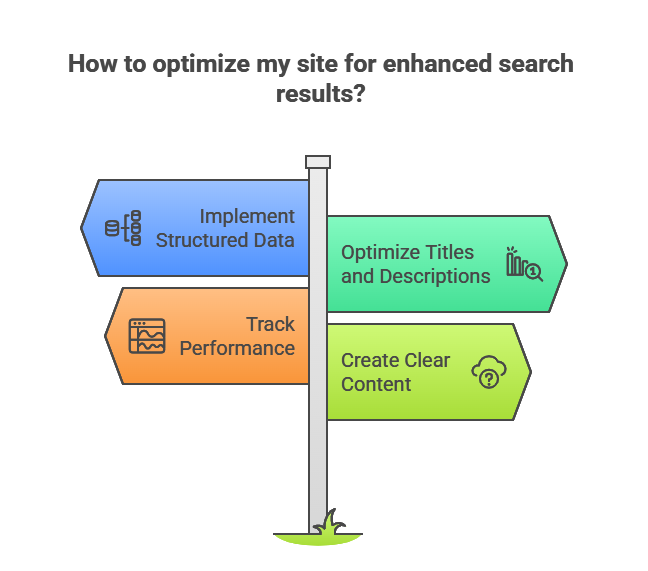
- Google notes that helpful, reliable, and people first content stands out across all search features.
Do small businesses really need paid SEO tools
You can start with free tools only, such as Google Search Console, Google Business Profile, and PageSpeed Insights. Many experts also recommend a free keyword tool from trusted guides.
As your traffic and revenue grow, you should invest in at least one paid platform. Paid data saves time, reveals more keyword options, and uncovers content gaps that free tools often miss.
Action checklist for choosing an SEO platform for your small business website
Use this final checklist to move from reading to action.
- Define one clear SEO goal and timeline.
- List your site type and main channels.
- Pick a budget that fits your target growth.
- Shortlist three platforms that match your tech stack.
- Test each platform with real tasks.
- Choose one main platform and one or two support tools.
- Commit to ninety days of focused action before judging results.
When you align goals, tools, and daily work, your small business website can climb above competitors and earn stronger visibility in search and in modern answer boxes.
Try These Tools Also